
Mã tài liệu: 220196
Số trang: 130
Định dạng: pdf
Dung lượng file: 1,360 Kb
Chuyên mục: Nông Lâm nghiệp
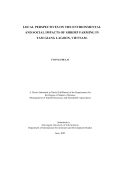
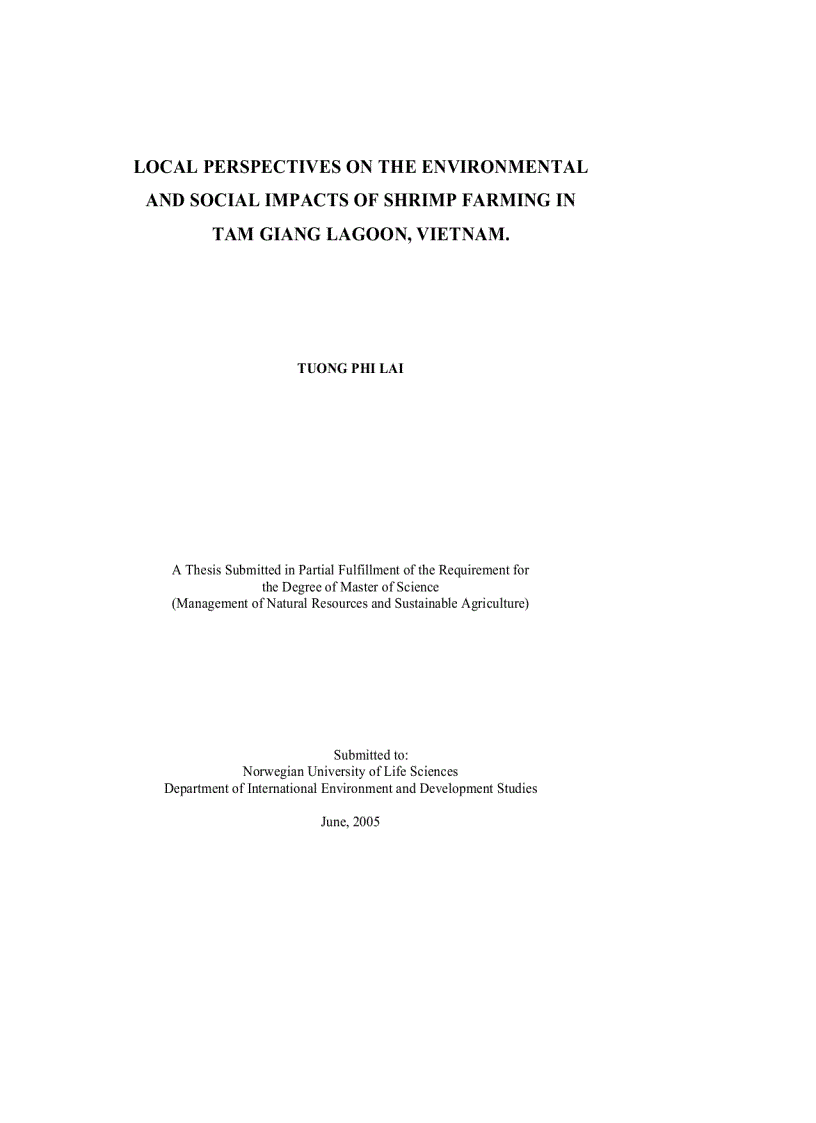
Shrimp aquaculture is one of the major economic activities in coastal areas of Vietnam.
However, the relation between shrimp aquaculture and coastal environmental and social
issues are not well documented in the Tam Giang lagoon. This thesis focused on the
environmental and social implications of shrimp aquaculture in three coastal shrimp
farming communes: Phu An, Phu Da and Vinh Ha in Phu Vang district. The links
between the impacts of shrimp farming and policies, institutions and farming practices
were investigated. Attention was paid to both negative and positive impacts of shrimp
farming. Local people's perceptions of these factors were investigated using a
participatory approach. We found that people perceived that waste discharges, fishery
reduction, habitat destruction and salinisation of soil to be the foremost environmental
impacts of shrimp farming. Meanwhile, conflicts among shrimp farmers, traders, fishers
and rice-farmers are important social impacts. In addition, debt burden, migration of
women and conflicts of interests among resource users and sectors and local government
were also considered to be critical issues. However, shrimp farming also significantly
contributes to income generation, employment creation and livelihood diversification in
coastal poor communities. The sector contributed to changing the livelihoods of local
people from subsistence and small-commodity production into commercial production,
that in the long run are important for local communities in the context of trade
liberalization and globalisation. The environmental and social impacts of shrimp farming
are strongly linked to economic reforms, aquaculture promotion policies and the
management of local government and local farming practices. We highlighted the need to
internalise the externalities of shrimp farming sector. We recommend the introduction of
environmentally friendly aquaculture within the framework of community-based and
integrated coastal area management. We also recommend the necessity of adjustment of
institutional frameworks to enhance environmental protection and improve the feasibility
of aquaculture planning and building capacity for local authorities and lagoon resource
users

Những tài liệu gần giống với tài liệu bạn đang xem
Những tài liệu bạn đã xem
 Environmental and Social Impacts of Shrimp farming in Tam Giang lagoon Vietnam Local perception
Shrimp aquaculture is one of the major economic activities in coastal areas of Vietnam. However, the relation between shrimp aquaculture and coastal environmental and social issues are not well documented in the Tam Giang lagoon. This thesis
pdf Đăng bởi
bao_tran_duc
Environmental and Social Impacts of Shrimp farming in Tam Giang lagoon Vietnam Local perception
Shrimp aquaculture is one of the major economic activities in coastal areas of Vietnam. However, the relation between shrimp aquaculture and coastal environmental and social issues are not well documented in the Tam Giang lagoon. This thesis
pdf Đăng bởi
bao_tran_duc