
Mã tài liệu: 643449
Số trang: 56
Định dạng: docx
Dung lượng file: 652 Kb
Chuyên mục: Du lịch và khách sạn
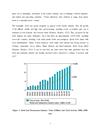
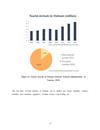
Tourism is one of the most important sources of foreign exchange earnings and one of the world’s biggest creators of employment (Phu and Anh et al., 2011). In many developing countries, the tourism industry is considered a pioneer income generator that helps boost economic development via job creation and poverty alleviation. The case holds true for Vietnam. The tourism industry of Vietnam, despite being young and immature, has been growing rapidly and contributed a significant part to the national economy. The sector accounts for 4.3% of Vietnam's GDP and 3.7% of all jobs, and are expected to almost double the global average over the course of the next 10 years (Business Monitor, 2013). The government has been playing a great role in stimulating investment in the tourism industry and coordinating between ministries and related and supporting industries. Tourist attractions have widened in range, from luxury travel to community-based tourism. The hospitality sector also grows alongside in support of the tourism industry. Plus, the growth of the affluent middle and high class and increasing spending power on holidays give rise to demands in both domestic and overseas travel (Business Monitor, 2013). Thus, prospects for the hotel segment are many. Estimation has it that there are approximately 8,000 hotels operating across the countries, including both small private hotels and prestigious global hotel chains with local establishments. Many of these luxurious hotel chains have already had strong presence in Vietnam, particularly Accor, Hilton, Hyatt, Marriott and InterContinental Hotel Group (IHG) (Business Monitor, 2013). It can be seen from the chart below that value generated from the hotel and restaurant industry has steadily increased and is expected to continue to increase until 2017. Hotel Continental Saigon is a luxurious hotel that is situated in the center of Ho Chi Minh City and directly competes with the above-mentioned five star hotel chains. Hotel Continental Saigon was the first hotel to be established in the old city and remained a noted facility until now. The hotel has faced moderately tough competition, as can be seen from the relatively large number of competitors in the industry and their rising popularity. Although the hotel has the advantage of a first mover, questions have been raised for Hotel Continental Saigon on how to magnify its initial advantages and remain competitive in the long term. In between, the author is keen on finding out to what extent the integration of information technology has been implemented to facilitate daily activities at the hotel. The application of IT products has been proven to have a close relationship with service quality and is expected to contribute a great deal to creating a competitive advantage to the hotel. The research attempts to conduct a survey on hotel employees on their level of technology readiness, based on which the management will be able to gain an insight into employees’ perception and acceptance of IT as well as identify training gaps at the introduction of a new technology in the future.


Những tài liệu gần giống với tài liệu bạn đang xem
Những tài liệu bạn đã xem
 Hotel Continental Saigon
Tourism is one of the most important sources of foreign exchange earnings and one of the world’s biggest creators of employment (Phu and Anh et al., 2011). In many developing countries, the tourism industry is considered a pioneer income
docx Đăng bởi
anh_pnguyen@yahoo.com
Hotel Continental Saigon
Tourism is one of the most important sources of foreign exchange earnings and one of the world’s biggest creators of employment (Phu and Anh et al., 2011). In many developing countries, the tourism industry is considered a pioneer income
docx Đăng bởi
anh_pnguyen@yahoo.com