
Mã tài liệu: 29861
Số trang: 66
Định dạng: docx
Dung lượng file: 2,516 Kb
Chuyên mục: Tiếng anh thương mại
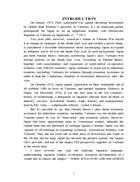
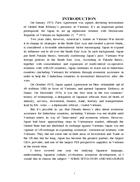
On January 1973, Paris Agreement was signed, declaring termination of United State Military’s presence in Vietnam. It’s an important politic prerequisite for Japan to set up diplomatic relation with Democratic Republic of Vietnam on September 21ơst 1973.
Two years later, however, American’s failure in Vietnam War forced it to change its strategies in the South East Asia and created a power blank, is considered a favorable international factor encouraging Japan to expand its influence out to all over the South East Asia. In such background, Japan put forth Fukuda theory, formally confirming Japan’s post- Vietnam War foreign policies in the South East Asia. According to Fukuda theory, together with consolidation and expansion of multi-lateral co-operative relations with ASEAN countries, Japan continues to reach out to Indochina countries (including Vietnam) for relations through economic assistance in order to help the 3 Indochina countries to reconstruct themselves after the wars.
On October 1975, Japan signed Agreement on Non- refundable aid of 49 millions USD in favor of Vietnam, and opened Japanese Embassy in Hanoi. On December 1976, it was the first time in the two countries’ history of relationship, a delegation of Japanese officials from all fields of industry, services, investment, finance, trade, forestry and transportation lead by Mr. Arita – a diplomatic official , visited Vietnam.
But it’s possible to say that Fukuda theory’s idea about economic assistance for Indochina countries, including Vietnam was not doable until Vietnam enters its way of “Innovation” and economic reform. However, Japan had basic approaching steps to Vietnamese market, although the United State had not abolished its embargo against Vietnam. Japan was not vigilant of US embargo in expanding economic- commercial relations with Vietnam. They did not come late in both areas of Investment and Trade as the US did, but for long, Japan has become the greatest partner, the largest ODA provider, and one of the largest FDI prospective suppliers in Vietnam in the recent time.
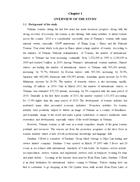
Chapter1.An Overview of Foreign Direct Investment in Vietnam (2004-2006)
Chapter2.Japanese Foreign Direct Investment in Viet Nam-Real Situation
Chapter3.Research Methodology
Chapter4.Some Measures Taken to Attract Japanese Foreign Direct Investment in Viet Nam
On January 1973, Paris Agreement was signed, declaring termination of United State Military’s presence in Vietnam. It’s an important politic prerequisite for Japan to set up diplomatic relation with Democratic Republic of Vietnam on September 21st 1973.
Two years later, however, American’s failure in Vietnam War forced it to change its strategies in the South East Asia and created a power blank, is considered a favorable international factor encouraging Japan to expand its influence out to all over the South East Asia. In such background, Japan put forth Fukuda theory, formally confirming Japan’s post- Vietnam War foreign policies in the South East Asia. According to Fukuda theory, together with consolidation and expansion of multi - lateral co - operative relations with ASEAN countries, Japan continues to reach out to Indochina countries (including Vietnam) for relations through economic assistance in order to help the 3 Indochina countries to reconstruct themselves after the wars.
On October 1975, Japan signed Agreement on Non- refundable aid of 49 millions USD in favor of Vietnam, and opened Japanese Embassy in Hanoi. On December 1976, it was the first time in the two countries’ history of relationship, a delegation of Japanese officials from all fields of industry, services, investment, finance, trade, forestry and transportation lead by Mr. Arita – a diplomatic official , visited Vietnam.
But it’s possible to say that Fukuda theory’s idea about economic assistance for Indochina countries, including Vietnam was not doable until Vietnam enters its way of “Innovation” and economic reform. However, Japan had basic approaching steps to Vietnamese market, although the UnitedState had not abolished its embargo against Vietnam. Japan was not vigilant of US embargo in expanding economic- commercial relations with


Những tài liệu gần giống với tài liệu bạn đang xem
Những tài liệu bạn đã xem
 Some situation and measures taken to attract japanese foreign direct investment in viet nam
On January 1973, Paris Agreement was signed, declaring termination of United State Military’s presence in Vietnam. It’s an important politic prerequisite for Japan to set up diplomatic relation with Democratic Republic of Vietnam on September 21ơst
docx Đăng bởi
ylygift
Some situation and measures taken to attract japanese foreign direct investment in viet nam
On January 1973, Paris Agreement was signed, declaring termination of United State Military’s presence in Vietnam. It’s an important politic prerequisite for Japan to set up diplomatic relation with Democratic Republic of Vietnam on September 21ơst
docx Đăng bởi
ylygift