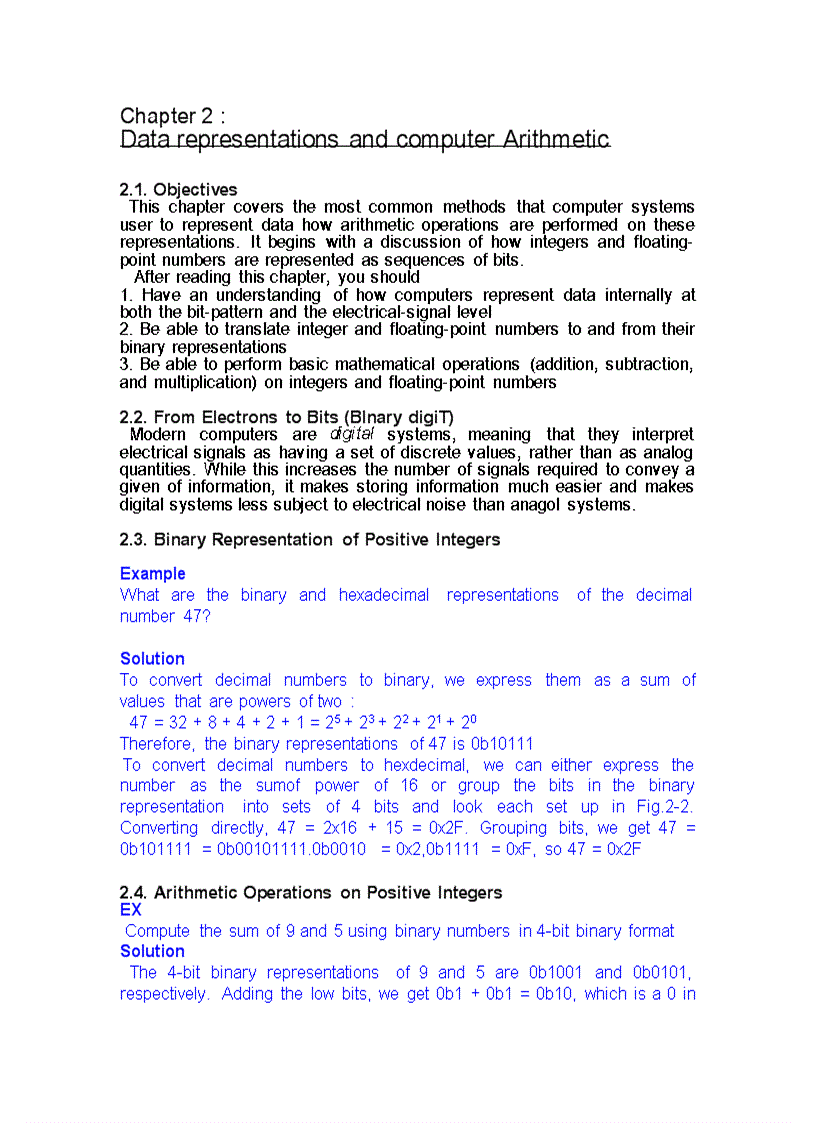
Chapter 2 :Data representations and computer Arithmetic2.1. Objectives This chapter covers the most common methods that computer systems user to represent data how arithmetic operations are performed on these representations. It begins with a discussion of how integers and floating-point numbers are represented as sequences of bits. After reading this chapter, you should1. Have an understanding of how computers represent data internally at both the bit-pattern and the electrical-signal level2. Be able to translate integer and floating-point numbers to and from their binary representations3. Be able to perform basic mathematical operations (addition, subtraction, and multiplication) on integers and floating-point numbers 2.2. From Electrons to Bits (BInary digiT) Modern computers are digital systems, meaning that they interpret electrical signals as having a set of discrete values, rather than as analog quantities. While this increases the number of signals required to convey a given of information, it makes storing information much easier and makes digital systems less subject to electrical noise than...
Phần bên dưới chỉ hiển thị một số trang ngẫu nhiên trong tài liệu. Bạn tải về để xem được bản đầy đủ
Data representations and computer ArithmeticChapter 2 :Data representations and computer Arithmetic2.1. Objectives This chapter covers the most common methods that computer systems user to represent data how arithmetic operations are performed on these representations. It begins with adoc Đăng bởi quocviet7705
5 stars -
329487 reviews
Thông tin tài liệu
4 trang
Đăng bởi: quocviet7705 -
10/09/2026
Ngôn ngữ: Việt nam, English
5 stars -
"Tài liệu tốt"
by khotrithucso.com,
Written on
10/09/2026
Tôi thấy tài liệu này rất chất lượng, đã giúp ích cho tôi rất nhiều. Chia sẻ thông tin với tôi nếu bạn quan tâm đến tài liệu: Data representations and computer Arithmetic