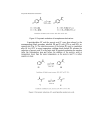

Enantioselective reduction of ketones to optically active secondary alcohols is one of the most interesting areas of research for a number of research groups.1–5 Enzymes have been widely used in converting ketones to the corresponding optically active secondary alcohols. This technique has shown good to excellent levels of enantiomeric excess.1–3 An alcohol dehydrogenase from the hyperthermophilic archaeon Pyrococcus furiosus has been used to catalyze the reduction of a variety of aliphatic ketones, aryl ketones, α- and β-ketoesters. Aryl ketones, α- and β-ketoesters that contain phenyl substituents were reported to be reduced to the corresponding enantiomerically pure chiral alcohols, whereas the reduction of aliphatic ketones gave a moderate levels of enantioselectivity. This indicates that the presence of a phenyl group adjacent to the carbonyl group could be an important factor for obtaining high levels of enantioselectivity.1 Voss et al. used a practical approach for inverting ...
Phần bên dưới chỉ hiển thị một số trang ngẫu nhiên trong tài liệu. Bạn tải về để xem được bản đầy đủ
GỢI Ý
Những tài liệu gần giống với tài liệu bạn đang xem
Enzymatic Reduction of Ketones to Optically Active Secondary AlcoholsEnantioselective reduction of ketones to optically active secondary alcohols is one of the most interesting areas of research for a number of research groups.1–5 Enzymes have been widely used in converting ketones to the corresponding opticallypdf Đăng bởi freelance1102
5 stars -
609730 reviews
Thông tin tài liệu
5 trang
Đăng bởi: freelance1102 -
02/01/2026
Ngôn ngữ: Việt nam, English
5 stars -
"Tài liệu tốt"
by khotrithucso.com,
Written on
02/01/2026
Tôi thấy tài liệu này rất chất lượng, đã giúp ích cho tôi rất nhiều. Chia sẻ thông tin với tôi nếu bạn quan tâm đến tài liệu: Enzymatic Reduction of Ketones to Optically Active Secondary Alcohols